
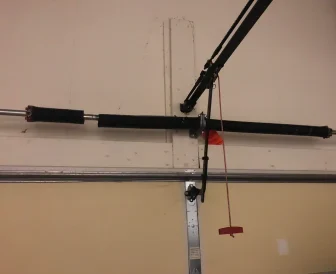
Broken Springs
Broken garage door springs can make your door heavy, difficult to open, or completely inoperable. These springs bear the weight of the door, and when they break, attempting to use the door can be dangerous. Common signs include loud snapping sounds, gaps in the spring, or the door struggling to lift. Replacing springs requires specialized tools and expertise, so it’s best left to professionals. Regular maintenance can extend the lifespan of your springs and prevent unexpected failures. If you suspect a broken spring, call or contact us for fast, safe, and reliable repair services!
Checking & Maintenance
Regular inspection of garage door springs helps prevent sudden failures and costly repairs. Look for signs of wear, rust, or gaps in the springs that indicate weakening. Lubricate the springs with a high-quality garage door lubricant to reduce friction and extend their lifespan. Avoid attempting DIY repairs, as broken springs can be dangerous to handle. If you hear a loud snap or notice the door struggling to open, call a professional immediately. Routine maintenance ensures smooth operation and prevents unexpected breakdowns. Contact us for expert garage door spring inspection and repair services!

Award Winning Firm
Rated 5 stars on Yelp & Google, we’re proud winners of the Angi Super Service Award (2023 & 2024) and Nextdoor Fave. Trust our expert team for top-quality, reliable garage door solutions!

Professional Workers
Our certified and trained technicians provide reliable, professional garage door services with a focus on quality and safety.

Licence & Insured
We are licensed, bonded, and insured, giving you peace of mind knowing that your garage door services are handled by trusted professionals.
Benefit of Service
At Doorgi Garage Doors, we use high-quality, U.S.-made garage door torsion springs designed to last between 10,000 and 25,000 cycles. Our durable springs ensure smooth operation, reducing the risk of sudden failures and costly repairs. Every spring comes with a 3-year warranty, with an option to extend up to 5 years—just ask your technician. Professional installation and regular maintenance further enhance the lifespan and performance of your garage door. Trust our expert team for reliable, long-lasting garage door solutions!
- U.S.-made garage door springs
- 10,000 and 25,000 cycles
- 3-year warranty, with an option to extend up to 5 years
- Professional installation
Common Myths About Garage Door Springs Debunked
Myth #1: Garage door springs last forever
Reality: Garage door springs have a finite lifespan.
Most standard springs are rated for 10,000–15,000 cycles, which typically equals 7–14 years depending on usage. High-cycle springs (25,000+ cycles) do last longer, but they still wear out and require replacement over time. In Bay Area and coastal regions, frequent fog, moisture, and salt air can cause corrosion that reduces spring lifespan well before cycle limits are reached. No spring is permanent, and failure is inevitable with enough use.
Myth #2: DIY spring replacement is safe and inexpensive
Reality: Replacing garage door springs is dangerous and should never be considered a casual DIY project.
Torsion springs can store hundreds of foot-pounds of torque, supporting doors that can weigh well into 500 pounds. A slip during adjustment can cause:
- Broken bones(arms, hand)
Severe lacerations
- Head trauma
Eye injuries
- Greater bodily harm is a door falls
Extension springs are also hazardous — when they fail or slip, they can whip violently like a steel cable. Professional tools, training, and safety procedures are essential.
Myth #3: If only one spring breaks, you only need to replace that one
Reality: Garage door springs wear at the same rate.
If one spring fails, the second is already near the end of its lifespan. Replacing just one potentially creates:
Door imbalance
Uneven lifting force
Accelerated wear on the new spring
Excess strain on the opener, cables, and bearings
This often leads to another breakdown shortly. At Doorgi Garage Doors, we strongly recommend both springs to be replaced together.
Myth #5: Noise or surface rust is normal and harmless
Reality: Springs are generally covered from the outside elements. Noise and rust are early warning signs, not cosmetic issues. Not all torsion springs are the same metal or have the same resistance to corrosion.
Grinding, popping, or squealing sounds indicate internal stress or metal fatigue. In humid or coastal environments like Bay Area, surface rust can penetrate deeper into the steel, leading to structural weakening and sudden failure — sometimes within 2 years if left unaddressed. The most common oil tempered torsion springs are the least resistance to outside elements. If your door system is heavy or aged and you see rust or hear noises on the spring, we suggest a service call for inspection.
Myth#5: You can unwind a torsion spring with pliers or by hand
Reality: Torsion spring adjustment requires specialized tools and precise technique.
Proper adjustment uses two solid steel winding bars (typically 18–24 inches long) forced in a section, and a controlled, step-by-step process. Never use pliers, screwdrivers, or makeshift tools, as that can cause the spring to release all stored energy instantly, resulting in serious injury, glass breakage or dents to the door.
Additional Questions About Garage Door Springs
No visible gaps, no loud bangs, door lifts smoothly by hand (with opener disengaged) but more importantly is light, and passes the balance test. If in doubt, have it inspected—preventive replacement is far cheaper than emergency service + possible component damage such as the opener.
No — garage door springs are under high tension are responsible for supporting the weight of the door. Doors can weigh up to 850 pounds, improper handling can result in damage to components or injury. Professional service is with the right tools and training to replace them safely.
Yes—persistent coastal humidity and salt air corrode springs far faster than inland. West-facing doors often need replacement 3–5 years earlier.
Torsion springs are mounted above the garage door and lift it using a controlled twisting motion, providing smoother, quieter operation, better balance, and a longer lifespan—making them the preferred option for most modern and heavier doors.
Extension springs run along the sides of the tracks and lift the door by stretching and contracting, which is more common on older or lighter doors and typically costs less upfront.
While both counterbalance the door’s weight, extension springs operate with less control and require safety cables, whereas torsion springs are generally safer, more durable, and easier on other garage door components.
Absolutely recommended. Torsion systems are quieter, safer, last longer, and eliminate the projectile risk of extension springs.
