Noisy Garage Doors

A noisy garage door is often more than just an annoyance—it can be an early warning sign of wear or mechanical issues. At Doorgi Garage Doors, we provide honest and effective noisy garage door inspection and repair to restore smooth, quiet operation. We offer free estimates and clearly explain what’s causing the noise before recommending any work. Our goal is not just to reduce sound, but to make sure your garage door is operating safely and correctly. Bothered by a loud, grindy or noisy door? Call or contact us for safe and reliable services!

Quick Overview of a Noisy Garage Door

Garage door noise can come from several different components. Causes such as worn rollers, unlubricated components, loose hardware, damaged hinges, unbalanced springs, misaligned tracks, or an opener that’s under strain. Grinding, squealing, rattling, or popping noises can indicate anything from normal wear to components nearing failure. Our technicians inspect the entire system to identify the true source of the noise and determine whether maintenance, adjustment, or repair is needed.
Award Winning Firm

Rated 5 stars on Yelp & Google, we’re proud winners of the Angi Super Service Award (2023 & 2024) and Nextdoor Fave. Trust our expert team for top-quality, reliable garage door solutions!

Professional Workers

Our certified and trained technicians provide reliable, professional garage door services with a focus on quality and safety.

Licence & Insured

We are licensed, bonded, and insured, giving you peace of mind knowing that your garage door services are handled by trusted professionals.

Benefit of Service

Fixing a noisy garage door often means addressing a bigger issue than the sound itself. Noise is frequently the first sign of imbalance, excessive friction, or stress on key components like springs, cables, and rollers. By diagnosing and resolving the underlying problem, we help prevent more serious damage, improve reliability, and extend the life of your garage door system. At Doorgi we communicate findings clearly, recommend only what’s necessary, and make sure your door operates quietly, safely, and efficiently.

Breakdown of Garage Door Noises

Different garage door noises usually point to specific mechanical issues. While some sounds are harmless early warnings, others can indicate a safety risk or imminent failure.

Squeaking or Squealing

What it sounds like: High-pitched squeaks, especially during opening or closing
Most common causes:

  • Dry hinges, rollers, or bearings

  • Lack of proper garage-door-specific lubrication

  • Aging nylon or steel rollers

Why it matters:
This is often the first sign of wear. Left untreated, dry components wear faster and can lead to roller failure or track damage.

Typical fix:
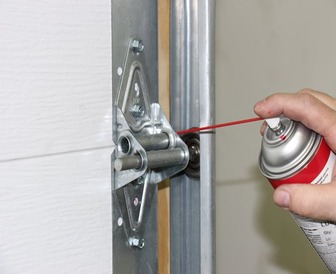
Professional lubrication, roller inspection, and replacement if worn. We advise silicone based lubrication.


Grinding or Scraping

What it sounds like: Metal-on-metal scraping or grinding
Most common causes:

  • Misaligned or bent tracks

  • Worn roller bearings

  • Debris or damage inside the track

Why it matters:
Grinding noises usually mean components are rubbing where they shouldn’t. Continued use can damage the tracks or cause the door to come off-track.

Typical fix:
Track realignment, roller replacement, and full hardware inspection.


Rattling or Clanking

What it sounds like: Loose shaking or vibrating noises
Most common causes:

  • Loose bolts, brackets, or hinges

  • Worn hardware

  • Door panels shifting during operation

Why it matters:
While often minor at first, loose hardware can worsen quickly and cause misalignment or uneven door movement.

Typical fix:
Hardware tightening, hinge replacement, and balance check.


Banging or Loud Popping

What it sounds like: Sudden loud bangs during operation
Most common causes:

  • Broken or failing torsion/extension spring

  • Door coming out of balance

  • Sudden release of stored spring tension

Why it matters:
This can be dangerous. A failing spring puts extra strain on the opener and can cause the door to drop unexpectedly. If you suspect a failing spring, do not attempt a DIY fix. Call or contact us for professional service immediately.

Typical fix:
Immediate professional inspection and spring replacement.


Thudding or Heavy Slamming

What it sounds like: Door drops or closes with a heavy thud
Most common causes:

  • Door is out of balance

  • Weak or failing springs

  • Incorrect opener force settings

Why it matters:
An unbalanced door stresses the opener and can lead to motor failure or broken cables.

Typical fix:
Spring adjustment or replacement and opener force calibration.


Humming or Buzzing (Without Door Movement)

What it sounds like: Motor hums but the door doesn’t move
Most common causes:

  • Stripped gears inside the opener

  • Capacitor issues

  • Door stuck due to spring or track problems

Why it matters:
Running the opener in this condition can burn out the motor.

Typical fix:
Opener diagnostics, gear replacement, or mechanical repair.

Clicking or Ticking

What it sounds like: Repetitive ticking or clicking during movement
Most common causes:

  • Frayed cables

  • Cracked hinges

  • Rollers nearing failure

Why it matters:
These noises often precede a sudden component failure.

Typical fix:
Cable, hinge, or roller replacement before a breakdown occurs.

Excessive Opener Noise

What it sounds like: Loud operation even though the door itself seems fine
Most common causes:

  • Chain-drive opener (inherently louder)

  • Worn motor mounts

  • Aging opener components

Why it matters:
Not all noise is from the door. Older openers can be significantly louder than modern belt-drive systems.

Typical fix:
Opener servicing or upgrading to a quieter belt-drive or direct-drive opener.


Sudden New Noises

What it sounds like: Any noise that appears abruptly
Most common causes:

  • Failing spring

  • Shifted track

  • Hardware failure

Why it matters:
A sudden change almost always means something has broken or is about to.

Typical fix:
Prompt professional inspection to prevent further damage.